EnCo ASE BOM

BOM Software for Structured Engineering Data

Manage components, assemblies and engineering information in a structured Bill of Materials and connect your hardware data with related engineering and safety activities.

Structured BOM Components & Assemblies
Reusable Data Engineering Knowledge
Integrated Engineering FMEDA & FTA
Request a BOM Demo
No obligation · Personal consultation · Fast response

From Components to Engineering Structure

Build a structured electronic BOM, define component specific reliability parameters and calculate the failure data required for quantitative FMEDA and Fault Tree Analysis.

01
Product Structure

Component Structure

Structure electronic components, subcomponents and assemblies within a consistent engineering BOM.

02
Reliability Data

Reliability Parameters

Assign the component data, operating conditions and technical parameters required for reliability prediction.

03
Reliability Prediction

FIT Rate Calculation

Calculate component failure rates using established reliability prediction methods and component specific operating data.

04
Failure Distribution

Failure Allocation

Allocate calculated component failure rates to relevant failure modes using established allocation data and methods.

05
Safety Analysis

FMEDA & FTA

Use consistent component failure rates and allocated failure data as a quantitative foundation for FMEDA and Fault Tree Analysis.

One Consistent Reliability Data Foundation Component Structure → FIT Rates → Failure Allocation → FMEDA & FTA

Core BOM Capabilities

Structure electronic components, maintain reliability data, calculate FIT rates and allocate failure information as a quantitative foundation for FMEDA and Fault Tree Analysis.

Product Structure

Hierarchical Component Structure

Organize electronic components, subcomponents and assemblies within a structured Engineering BOM and create the product hierarchy required for consistent reliability analysis.

  • Structure components and assemblies hierarchically
  • Represent technical product relationships clearly
  • Create a consistent basis for reliability calculations
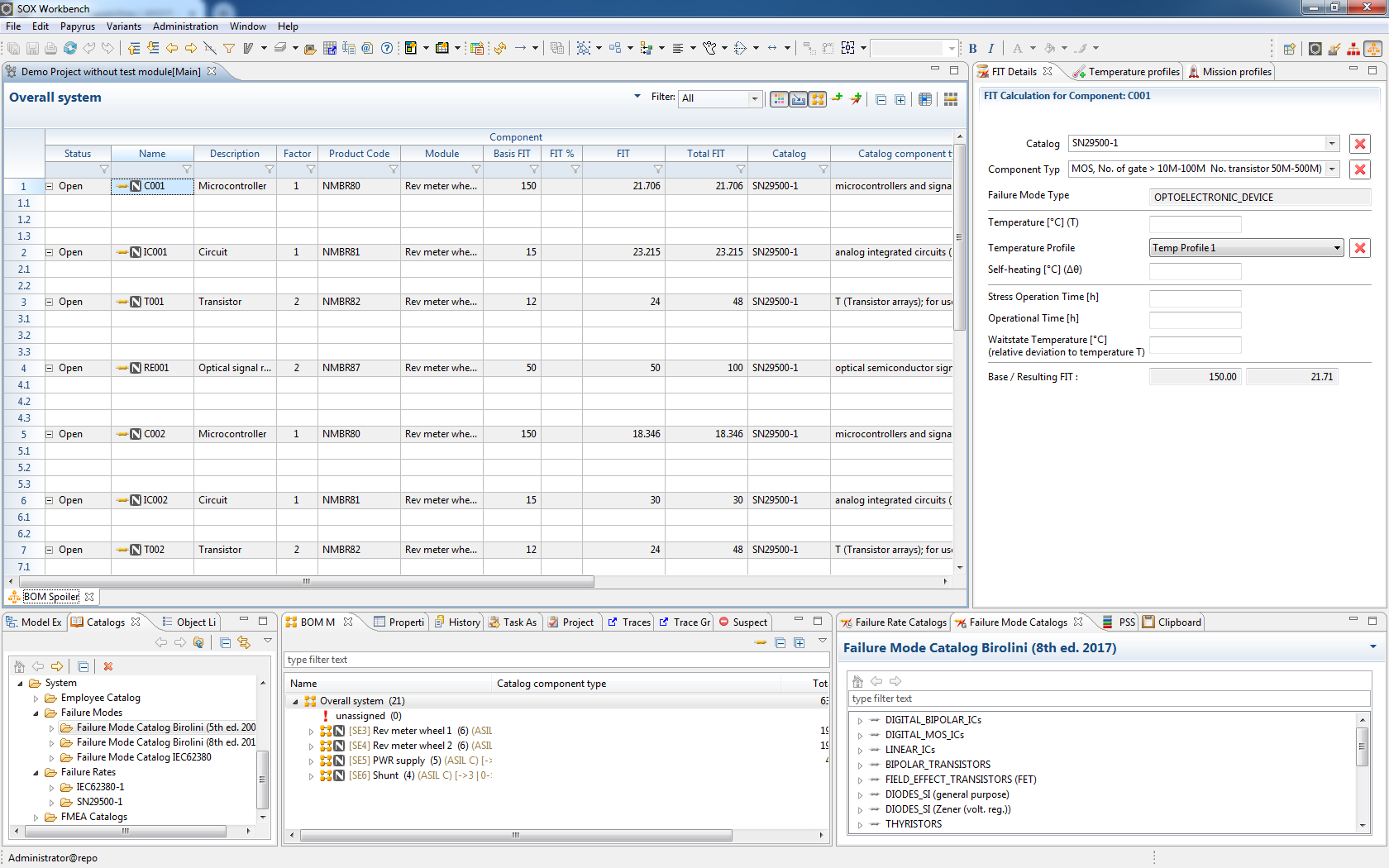
EnCo ASE Reliability Editor
Reliability Prediction

Reliability Data & FIT Rate Calculation

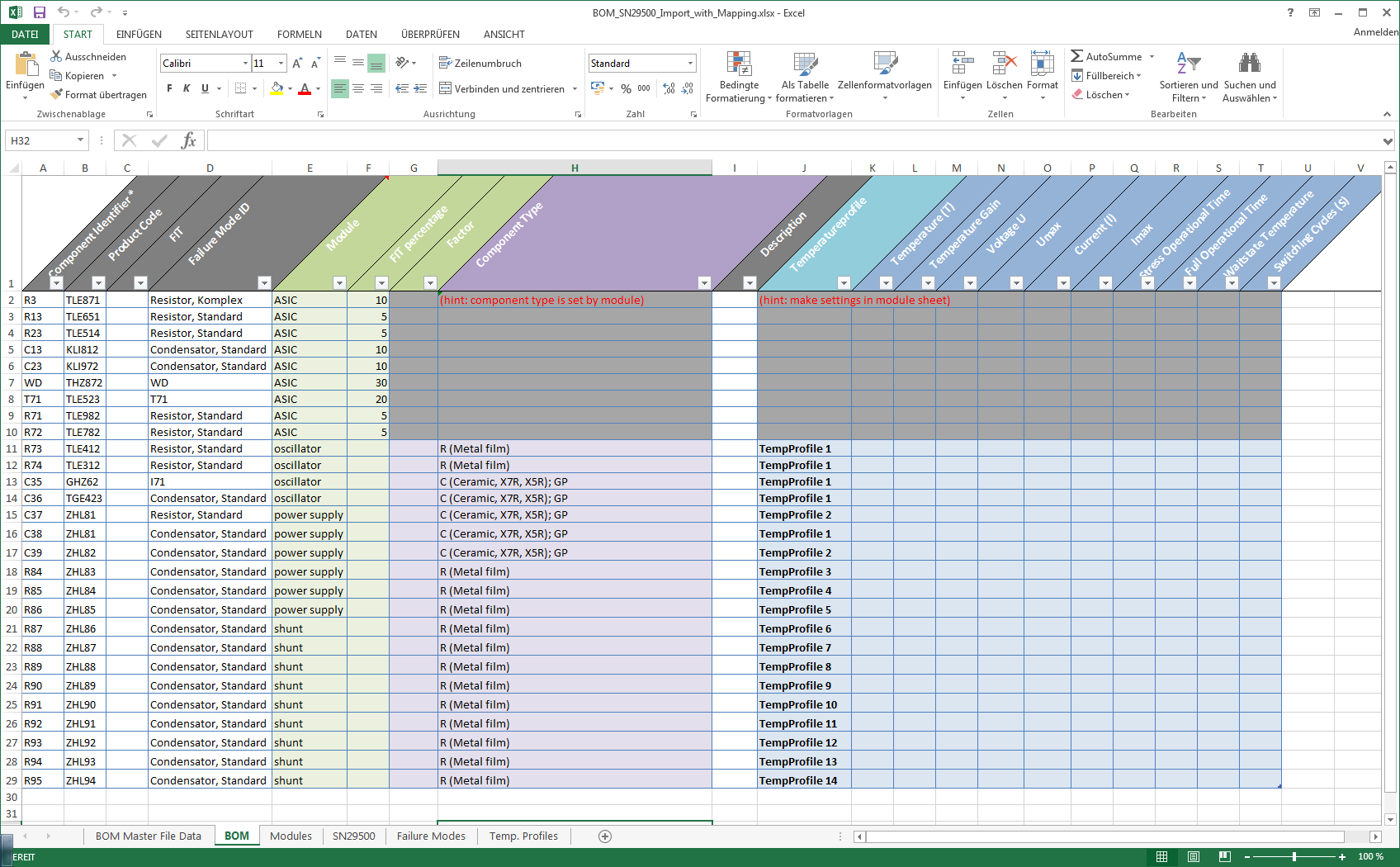
Maintain component specific reliability parameters and calculate failure rates using technical component data, operating conditions and established reliability prediction methods.

  • Maintain component specific reliability parameters
  • Consider relevant operating and environmental conditions
  • Calculate component failure rates and FIT values
EnCo ASE BOM reliability data import and mapping
Reliability Models

Failure Rate Models & Allocation

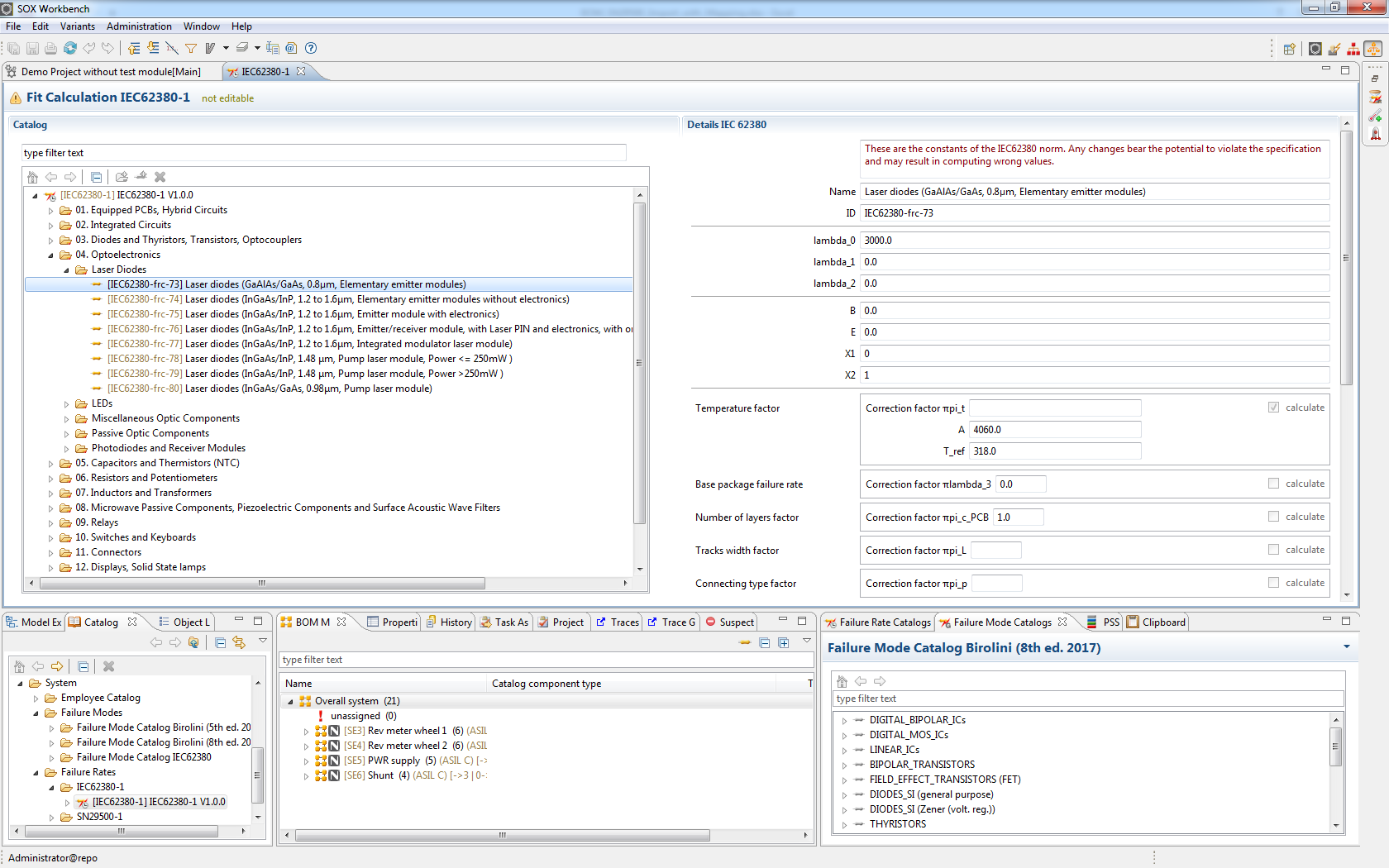
Apply established reliability methods to calculate component failure rates and allocate failure information for subsequent quantitative safety analysis.

  • Failure allocation based on IEC 62380
  • IEC 61709 and additional reliability methods
  • Reliability prediction using MIL-HDBK-217
  • Allocate failure rates to relevant failure modes
EnCo ASE IEC reliability component catalogue
Quantitative Safety Analysis

Reliability Data for FMEDA & FTA

Use calculated FIT rates and allocated component failure data as a consistent quantitative foundation for FMEDA and Fault Tree Analysis. Reliability information remains connected with the underlying component structure and can be used across related safety analyses.

Provide calculated FIT rates for FMEDA
Use component failure rates within FTA
Maintain consistent reliability data across analyses

BOM as an Engineering Foundation

A structured Engineering BOM provides more than a list of components. It creates a shared product structure that can support connected engineering and safety activities throughout development.

Product Context

Product Structure

Components and assemblies form a structured representation of the technical product hierarchy.

Technical Information

Component Data

Relevant technical information remains associated with the components and assemblies where it belongs.

Shared Product Structure Engineering
BOM
EnCo ASE
Hardware Safety

FMEDA

Use the structured hardware composition as a foundation for related hardware safety analysis.

Fault Tree Analysis

FTA

Maintain product context when analyzing failure paths and their contribution to system level events.

Engineering Context

Requirements

Keep relevant requirements within the wider engineering context of the product and its technical structure.

One Product Structure Maintain a consistent structural foundation for related engineering activities.
Connected Engineering Data Keep technical information connected instead of maintaining isolated data structures.
Less Duplicate Work Build on existing product information across related engineering and safety activities.

Turn the BOM into a shared engineering foundation. EnCo ASE connects product structure and component information with related engineering activities, helping teams work with consistent product context across the development process.

Data, Libraries & Knowledge Reuse

Build on established component information and engineering knowledge instead of recreating product data for every new project.

01
Engineering Data

Component Data

Maintain relevant technical information together with the components and assemblies used within the Engineering BOM.

Technical component information

Structured engineering attributes

Consistent product information

02
Established Information

Libraries

Organize established component information so that engineering teams can build on known data rather than repeatedly creating the same information from scratch.

Established component information

Common engineering data

Consistent data foundations

03
Product Development

Reuse

Build new product structures on existing engineering information where components, assemblies or established structures are used again.

Reuse established information

Reduce repeated data entry

Support related product variants

04
Long Term Value

Engineering Knowledge

Preserve established product information and engineering experience so that knowledge remains available for future products, projects and analyses.

Preserve engineering experience

Improve data consistency

Build on previous project knowledge

Reusable Engineering Knowledge

Every project can strengthen the next.

Established product information does not have to remain isolated within a single project. Reusable engineering data can provide a stronger and more consistent starting point for future development.

Create
Maintain
Reuse
Extend
Reduce Duplicate Data Build on established information instead of maintaining the same engineering data repeatedly.
Improve Consistency Use established engineering information as a common foundation across related products and projects.
Preserve Knowledge Keep engineering experience available beyond the project in which it was originally created.

Turn product data into reusable engineering knowledge. EnCo ASE helps teams build on established component information, product structures and engineering experience so that future projects can start with a stronger and more consistent data foundation.

Technical Overview

Key reliability and engineering capabilities of EnCo ASE BOM at a glance.

Primary Purpose

FIT Rate
Calculation

Reliability Prediction

IEC 62380
& IEC 61709

Additional Method

MIL-HDBK-217
Reliability Prediction

Product Structure

Components
& Assemblies

Failure Data

Failure Rates
& Allocation

Safety Integration

FMEDA
& FTA

Why Dedicated BOM Software?

Engineering BOMs quickly become difficult to manage when product structures, component information and related engineering data are maintained across disconnected files and tools.

01
Product Complexity

Manage Complex Product Structures

As products grow, components, assemblies and multiple hierarchy levels become increasingly difficult to maintain in flat lists or disconnected spreadsheets.

Structured hierarchical product data
02
Data Quality

Maintain Data Consistency

When component information is maintained independently in different files and analyses, inconsistencies can quickly develop between engineering activities.

Consistent engineering information
03
Engineering Efficiency

Reduce Duplicate Engineering Work

Recreating component structures and technical information for every project or analysis increases effort and makes established engineering knowledge harder to reuse.

Reusable product and component information
04
Connected Engineering

Connect BOM Data with Engineering Processes

Product structure becomes more valuable when it can provide context for related engineering activities instead of remaining an isolated list of components.

Connected product and engineering context
Manual or Isolated BOM Management Growing complexity

More components, variants and engineering information make disconnected lists increasingly difficult to maintain consistently.

Dedicated BOM Software Structured engineering data

Product structures, component information and related engineering context remain organized within a dedicated environment.

More Than a Component List

A BOM becomes more valuable when it becomes part of engineering.

EnCo ASE BOM provides a structured environment for organizing product structures and component information while keeping that information available within the wider engineering context.

Frequently Asked Questions About BOM Software

Find answers to common questions about electronic BOM structures, FIT rate calculation, reliability prediction, failure allocation and the use of reliability data in FMEDA and Fault Tree Analysis.

What is EnCo ASE BOM?

EnCo ASE BOM is an engineering solution for structuring electronic components and assemblies while managing the reliability data associated with them. It supports the calculation and allocation of component failure rates and provides quantitative reliability information for subsequent FMEDA and Fault Tree Analysis.

What is a FIT rate?

FIT stands for Failures In Time and is commonly used to express the failure rate of electronic components. One FIT represents one expected failure per one billion operating hours. FIT values provide a quantitative basis for evaluating component reliability and can be used in analyses such as FMEDA and FTA.

How are FIT rates calculated in EnCo ASE BOM?

EnCo ASE BOM combines component specific technical information with relevant operating and environmental parameters to determine component failure rates using established reliability prediction methods. The resulting FIT values remain associated with the corresponding components within the structured BOM.

Does EnCo ASE BOM support IEC 62380?

Yes. EnCo ASE BOM supports reliability prediction and failure allocation based on IEC 62380. Component parameters and operating conditions can be used to determine quantitative failure data that can subsequently support safety analyses.

Does EnCo ASE BOM support IEC 61709?

Yes. IEC 61709 can be used within the reliability calculation process alongside other supported methods. This allows engineering teams to calculate and maintain component failure data using established reliability approaches appropriate to their analysis.

Does EnCo ASE BOM support MIL-HDBK-217?

Yes. EnCo ASE BOM supports reliability prediction using MIL-HDBK-217 in addition to methods such as IEC 62380 and IEC 61709. This provides additional options for calculating component failure rates according to the reliability approach required for a particular project.

What is failure allocation?

Failure allocation distributes the overall failure rate of a component across relevant failure modes. Instead of working only with a single component FIT value, engineers can determine which proportion of the failure rate is associated with specific failure behavior. This information is particularly important for quantitative FMEDA and FTA.

How is BOM reliability data used in FMEDA?

FMEDA requires quantitative hardware failure information to evaluate component failure modes and their contribution to the analyzed system. The calculated component failure rates and allocated failure data from the BOM provide a consistent quantitative foundation for this analysis.

Can BOM failure rates be used in Fault Tree Analysis?

Yes. Calculated component failure rates can provide quantitative input for Fault Tree Analysis. This allows the component reliability information maintained within the BOM to contribute to quantitative evaluations of events and failure paths within a fault tree.

Why connect component structure and reliability data?

Reliability information is most useful when it remains associated with the physical components and assemblies it describes. A structured engineering BOM connects product hierarchy, technical component information and calculated failure data so that changes can be understood within the correct product context.

Can existing component and reliability data be reused?

Reusing established component information and reliability data can reduce repeated data preparation and improve consistency between projects. Existing component structures, reliability parameters and calculated failure information can provide a foundation for subsequent analyses where the technical context remains applicable.

Why use dedicated BOM software for reliability analysis?

A reliability oriented BOM contains more than part numbers and quantities. It connects component structure with technical parameters, reliability prediction, FIT rates and failure allocation. Dedicated BOM software helps engineers manage these relationships systematically and prepare consistent quantitative data for FMEDA and FTA.

Ready to Build a Better Engineering BOM?

See how EnCo ASE BOM can help your engineering team structure product data, manage components and assemblies and create a consistent foundation for connected engineering and safety activities.

Request BOM Demo No obligation · Personal consultation · Fast response